
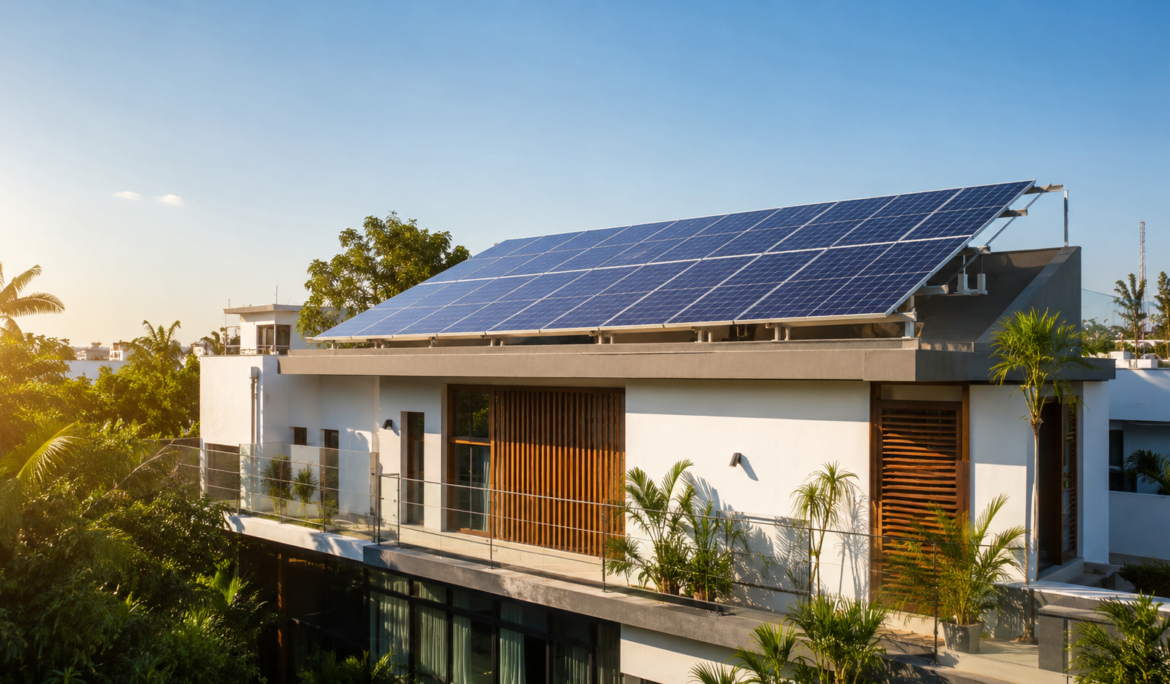
India is witnessing a major shift towards clean and sustainable energy, and solar power is at the heart of this transformation. With abundant sunlight available across most parts of the country, solar energy has become a practical solution for homeowners, businesses, industries and institutions looking to reduce their dependence on conventional electricity.
According to the Ministry of New and Renewable Energy (MNRE), India had around 30.74 GW of grid-connected rooftop solar capacity as of 31 July 2026, highlighting the rapidly growing adoption of rooftop solar systems across the country.
But why are more people choosing solar? And is installing a solar system really worth the investment?
Let’s understand.
What Is Rooftop Solar?
A rooftop solar system is a solar photovoltaic (PV) system installed on the roof of a residential or commercial building. Solar panels convert sunlight into electricity, which can then be used to power appliances, equipment and other electrical loads.
Depending on the system design, a rooftop solar installation can be:
- On-grid solar system – connected to the electricity grid
- Off-grid solar system – works independently with battery storage
- Hybrid solar system – combines solar, grid power and battery backup
For many homes and businesses, an appropriately designed on-grid system can significantly reduce electricity purchases from the grid.
Why Is Solar Energy Becoming So Popular?
1. Lower Electricity Expenses
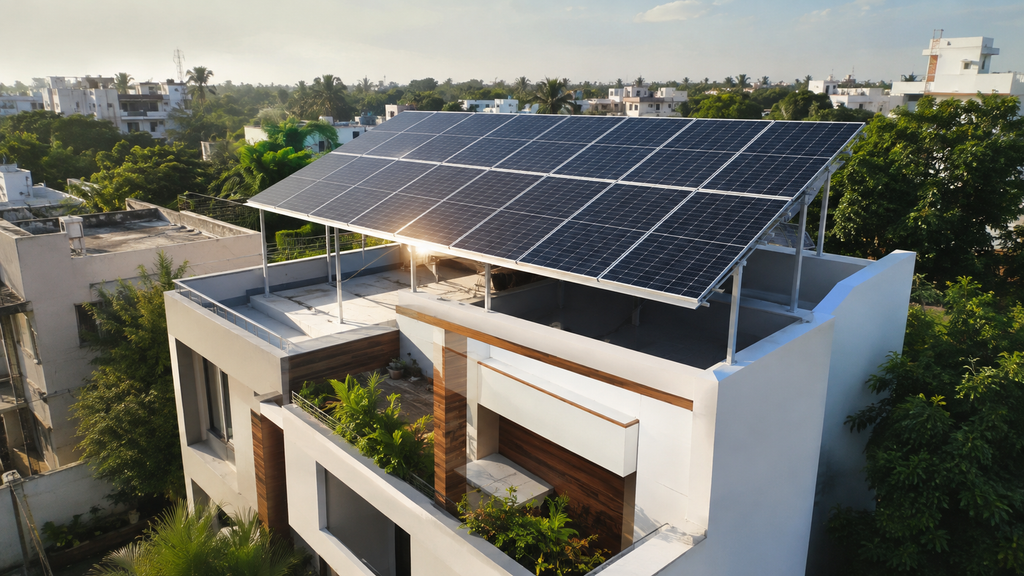
One of the biggest advantages of rooftop solar is the potential to reduce monthly electricity expenses.
Instead of purchasing all your electricity from the grid, a solar system allows you to generate a portion of your electricity directly from sunlight. Over the lifetime of a properly maintained system, this can make solar an attractive long-term investment.
2. Solar Energy Is Clean and Renewable
Unlike conventional fossil-fuel-based electricity generation, solar power does not require fuel to generate electricity.
Sunlight is naturally available and renewable, making solar energy an important part of India’s transition towards cleaner energy.
3. Government Support for Residential Solar
The Government of India introduced the PM-Surya Ghar: Muft Bijli Yojana to encourage rooftop solar adoption among residential consumers.
Under the scheme’s notified structure, Central Financial Assistance is available for eligible residential rooftop solar installations, with support structured for the first 2 kW and additional capacity up to 3 kW. Applications and the process are handled through the National Portal and the relevant electricity distribution utility.
Consumers should always check the latest official guidelines and eligibility requirements before making an installation decision.
4. Better Energy Independence
Electricity prices and consumption can change over time. Generating electricity at your own premises can provide greater control over your energy costs.
For businesses with significant daytime electricity consumption, this can be particularly useful because solar generation generally occurs during daylight hours.
How Does a Solar System Work?
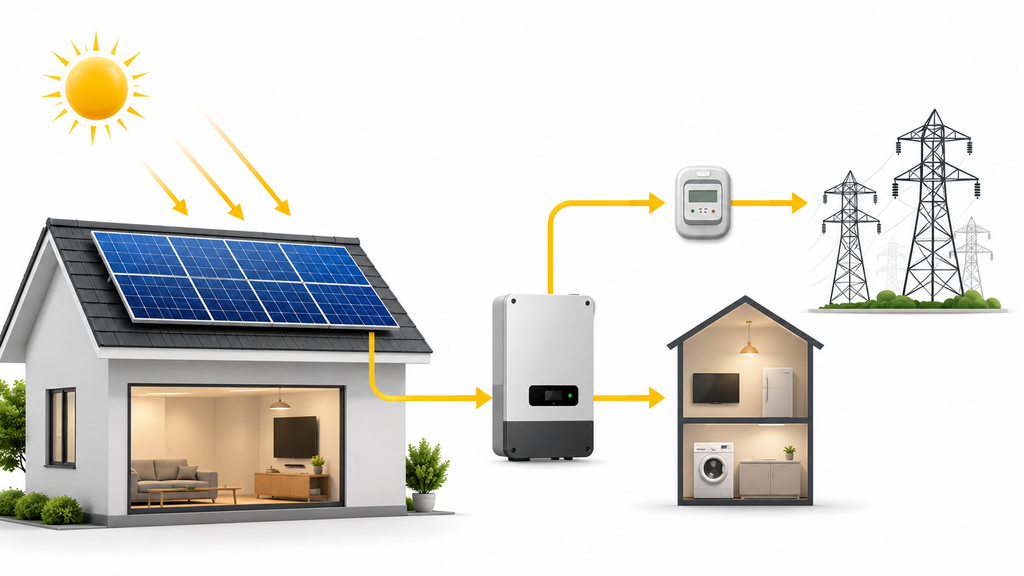
The working process is relatively simple:
Sunlight → Solar Panels → Inverter → Electrical Loads → Grid/Battery
Solar panels generate DC electricity when sunlight falls on them. The inverter converts this DC electricity into AC electricity that can be used by normal electrical appliances.
In an on-grid system, excess electricity may be exported to the grid according to the applicable state regulations and approved metering arrangement.
How Many Solar Panels Does a Home Need?
There is no single answer because the required solar capacity depends on several factors, including:
- Monthly electricity consumption
- Available rooftop area
- Roof orientation and shading
- Solar panel efficiency
- Local weather conditions
- Type and efficiency of inverter
- Electricity tariff
- Desired level of energy generation
Therefore, choosing a solar system based only on the number of rooms or the size of the house is not recommended.
A professional site assessment and electricity-consumption analysis can help determine the appropriate system size.
What Should You Check Before Installing Solar?
Choosing the cheapest quotation is not always the best approach. A solar installation is a long-term investment, so customers should carefully evaluate:
Solar Panels
Check the panel technology, efficiency, warranty and applicable certification requirements.
Inverter
The inverter is one of the most important components of a solar system. Its capacity, efficiency, warranty and compatibility with the proposed system should be evaluated.
Installation Quality
Even high-quality equipment can perform poorly if installation is not done correctly. Proper mounting, wiring, earthing, protection devices and system configuration are essential.
After-Sales Service
Solar is a long-term investment. Therefore, warranty support, maintenance and availability of service should be considered before selecting a vendor.
Genuine Products & Compliance
Customers should verify that the proposed equipment and installation meet the applicable government, DISCOM and technical requirements, especially when applying under a government-supported rooftop solar programme.
Is Solar Worth the Investment?
For many consumers, solar can be a financially attractive long-term option, but the economics depend on individual circumstances.
The expected savings depend on factors such as:
System Cost + Available Subsidy/Financial Assistance + Electricity Consumption + Electricity Tariff + Solar Generation + System Life
A proper feasibility calculation should be done before installation rather than relying on generic savings claims.
Solar Is More Than Just Saving Money
The biggest advantage of solar is not limited to reducing electricity bills.
The transition towards renewable energy can contribute to:
- Cleaner electricity generation
- Reduced dependence on conventional energy sources
- Greater energy awareness
- Sustainable development
- Long-term energy security
India receives substantial solar radiation across much of its geography, giving solar power significant potential as part of the country’s energy mix.
The Future of Solar Energy in India
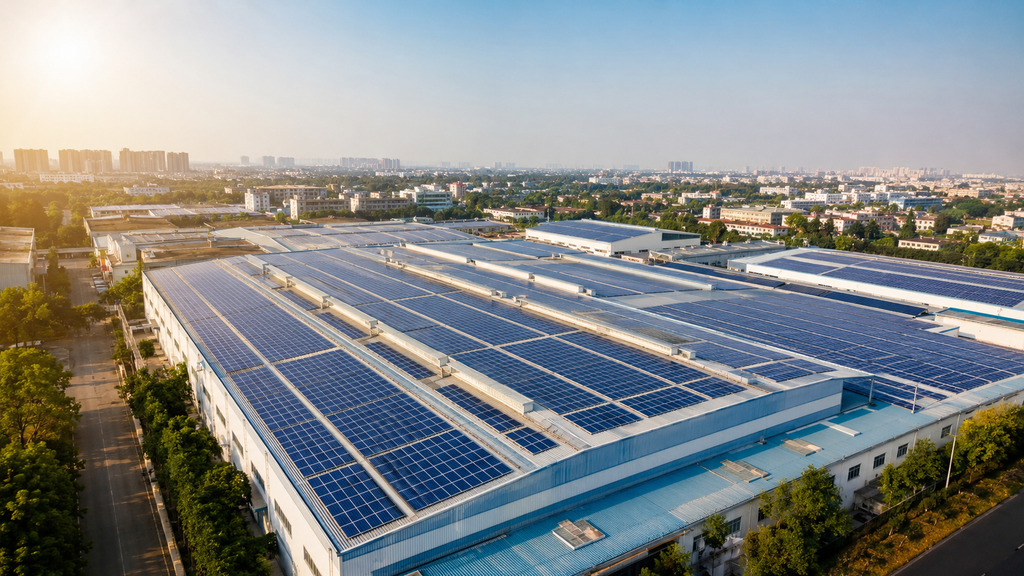
Solar energy is no longer considered only an alternative source of electricity. It is becoming an important part of India’s energy infrastructure.
With increasing awareness, improving technology, government initiatives and growing rooftop installations, solar power is expected to play an increasingly important role in residential, commercial and industrial energy consumption.
For a homeowner or business considering solar, the right approach is simple:
Understand your electricity consumption → Assess your roof → Choose suitable technology → Select a reliable installer → Check applicable government/DISCOM requirements → Calculate long-term savings.
Solar is not simply about installing panels on a roof. It is about making a long-term investment in smarter and cleaner energy.
Conclusion
The growing adoption of rooftop solar in India reflects a broader change in how consumers think about electricity. Instead of depending entirely on conventional grid power, homes and businesses now have the opportunity to generate a portion of their own electricity.
With the right system design, quality components, professional installation and proper maintenance, rooftop solar can be a smart step towards energy independence and sustainable growth.
Before investing, always compare system specifications, warranties, installation quality, expected generation and applicable government benefits rather than choosing a solar system purely on price.